Church of Saint-Sulpice
The Church of Saint-Sulpice, a Parisian landmark with an architectural footprint matching that of Notre Dame, is a site of profound historical and symbolic significance within the narrative. Built over the ruins of an ancient temple to the Egyptian goddess Isis, the church has hosted the baptisms of the Marquis de Sade and Baudelaire, as well as the marriage of Victor Hugo. Its attached seminary has a well-documented history of unorthodoxy and was once a clandestine meeting hall for numerous secret societies, establishing the church as a place where hidden histories and covert activities converge.
The Rose Line and the Search for the Keystone
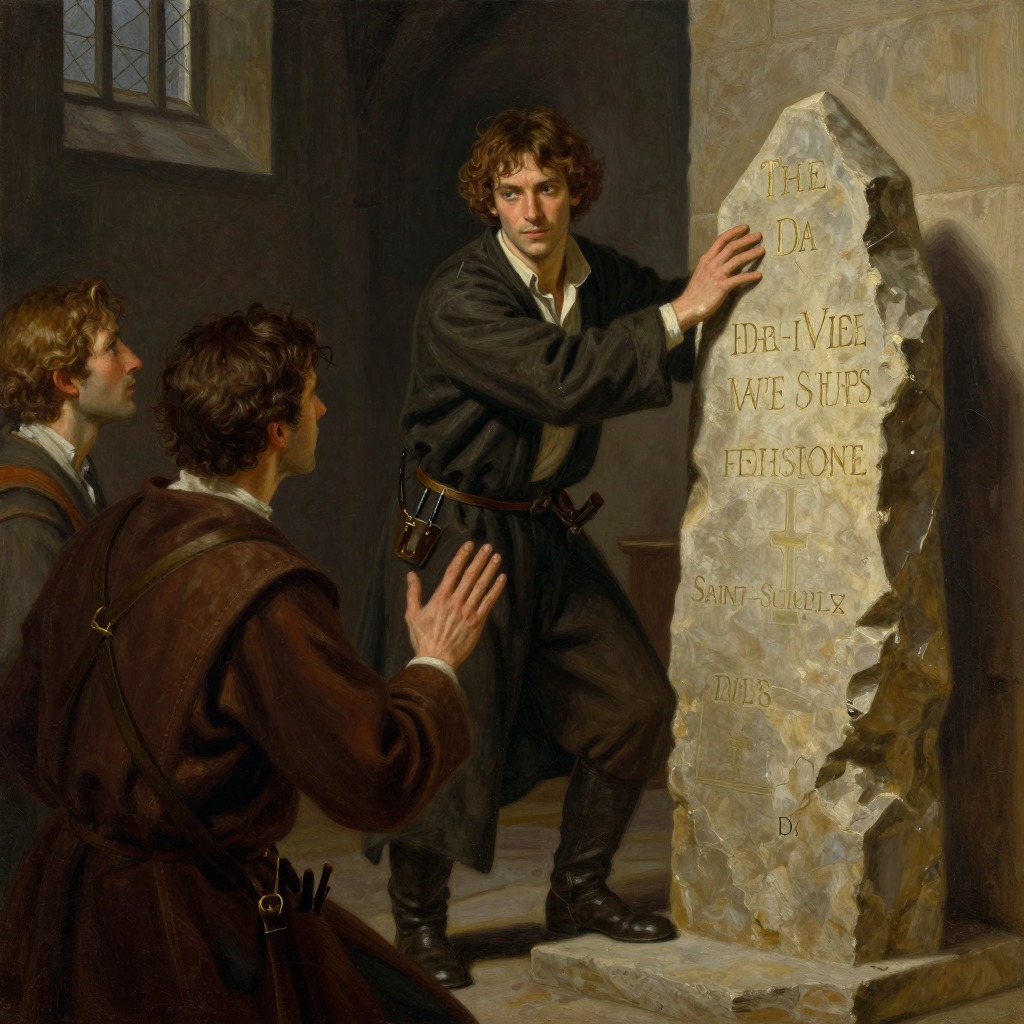
The church's most famous architectural oddity is a thin, polished brass strip embedded in the gray granite floor, known as the Rose Line. This gnomon, a pagan astronomical device like a sundial, runs on a perfect north-south axis, slicing across the main altar and the communion rail before reaching the base of a colossal Egyptian obelisk in the north transept. The line is a memorial to the world's first prime meridian, which passed through Paris before Greenwich was established in 1888. Silas, acting on information extracted from the murdered Priory leaders, comes to Saint-Sulpice believing the keystone is hidden beneath this Rose Line, at the base of the obelisk. He breaks a floor tile there and discovers a stone tablet bearing the inscription "Job 38:11," a Bible verse that leads him to the church's main altar and a leather-bound Bible, only to find the verse reads "HITHERTO SHALT THOU COME, BUT NO FURTHER," a dead end.
Sister Sandrine's Vigil and Death
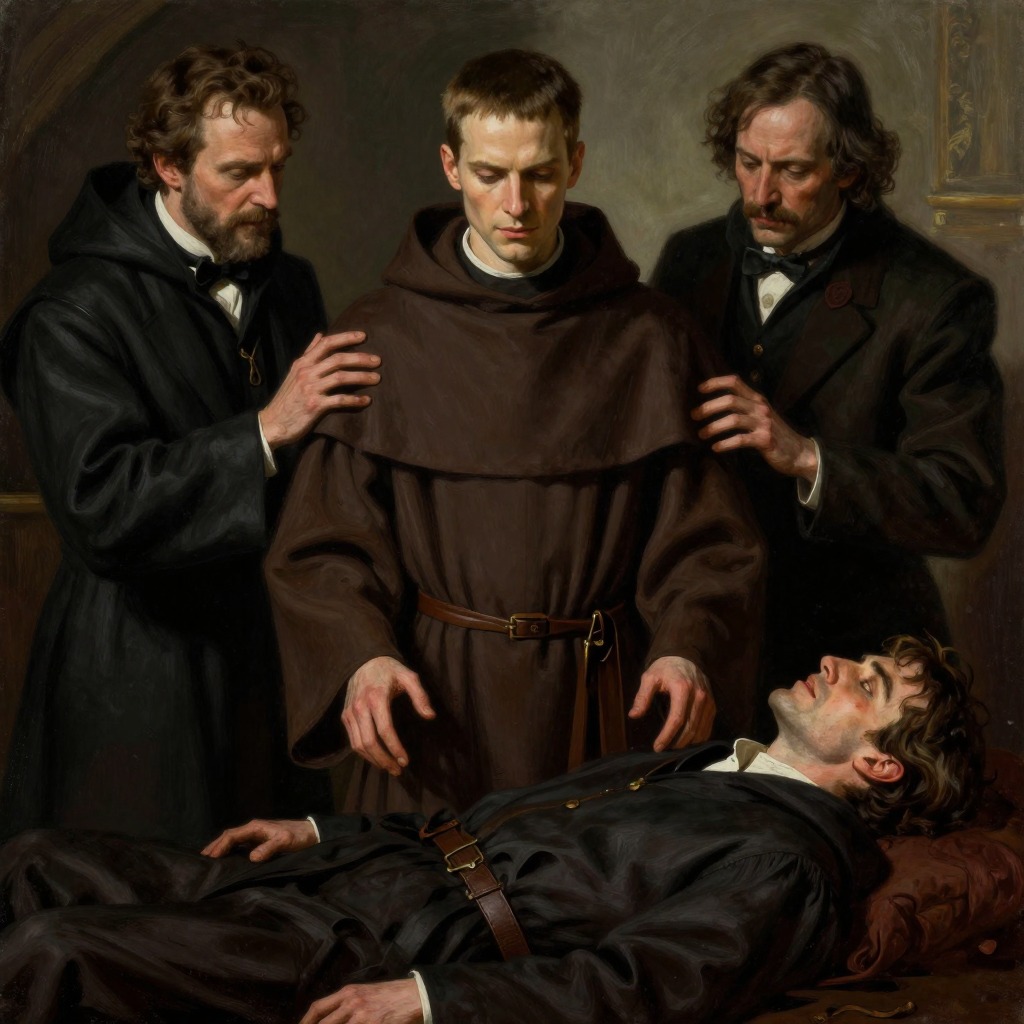
Sister Sandrine Bieil, the church's conservatrice d'affaires, lives in a modest two-room suite on the second floor. She is responsible for overseeing all nonreligious aspects of church operations, including securing the building after hours. When she is awoken by a phone call from the abbé, who asks her to admit an Opus Dei numerary—Silas—for a late-night visit, she complies, though she feels a deepening unease. Her suspicion is confirmed when she observes Silas from the choir balcony, witnessing him break the floor tile and retrieve the stone tablet. Recognizing him as a threat, she retreats to her quarters to activate a silent alarm, calling four phone numbers she has kept hidden for years. Before she can complete her warning, Silas finds her and kills her with a heavy iron candle stand, silencing the last link in the Priory's emergency chain.
Narrative Role and Significance
The Church of Saint-Sulpice functions as a crucial, yet deceptive, waypoint in the quest for the Holy Grail. It is the site where the Teacher's plan, orchestrated through Silas, first encounters a major setback, as the information extracted from the Priory leaders proves to be a false lead. The church's history, its pagan origins, and its prominent Rose Line make it a symbolically rich location for a Grail-related mystery, but the narrative ultimately reveals it as a decoy, a carefully constructed lie designed to protect the true secret. The murder of Sister Sandrine underscores the ruthless lengths to which the Teacher and Silas will go, and it marks a point of no return for Silas, who has now killed a woman of the cloth within a house of God.